
Access to Trusted Data, Agent-Native Architecture, and Execution Governance at Runtime
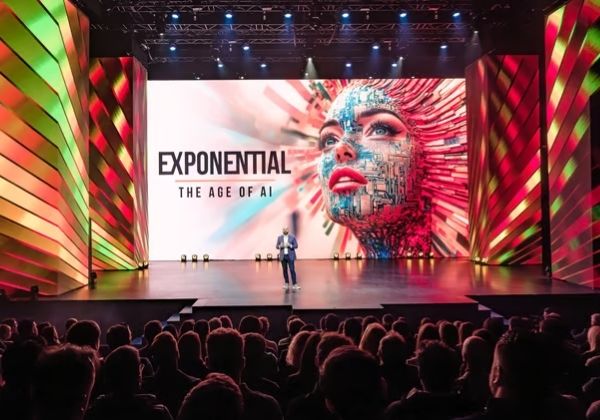
On June 3rd at Freemasons Hall London, the RavenPack Exponential brought home the reality of how fast the industry is moving. Access to information and the ability to act on it has always been the advantage – and agents entering investment workflows offer an exponential increase to the breadth and depth of research, potentially making everyone a quant. The differentiating factor now will be access to data you can trust, which will require provenance, ownership, and evidence to scale. The economics will also need to change, with Armando Gonzalez arguing that just as we are tokenising shares, we now need to tokenise content – priced by value and demand rather than fixed per-user costs. An interesting concept, but if the agent only pays for what it needs in paragraphs 2 and 3, is there a danger of it operating in an echo chamber? As usual, as many questions as answers – but here’s what else I learnt this week on AI in Trading:
1. Exponential Summit: Provenance Over Models, Trusted Data Over Capability
The summit revealed that AI adoption in investment management is well underway, with most firms already using it in some form. But what matters now is how agents enter investment workflows – not as humans, as Aakarsh Ramchandani reminded us, but as autonomous tech colleagues that gather information and create reasoning independently, scaling both the breadth and depth of intelligence available to traders. This fundamental shift makes provenance and data quality far more important than model sophistication. The real moat is no longer the underlying model itself, which will become a commodity utility like electricity or WiFi. Instead, competitive advantage comes from the accurate blend of proprietary and acquired data that can be verified and trusted.
The breadth and depth of data now accessible means AI can consume the entire value chain – making data integrity and provenance essential. Entitlements and attribution tracking become critical as both humans and agents consume content, and institutional clients increasingly demand transparency in sourcing and content lineage. But high-quality content also can directly reduce AI hallucination risk and lower inference costs, creating a new value proposition. Peter Hafez demonstrated 50% of data improved performance while halving costs, proving that high-quality context reduces both compute and hallucination. This points to a broader principle: augmentation (human plus AI) is preferred over replacement, with analysts shifting toward higher-order interpretation work while testing more datasets becomes economically viable – though human oversight remains required before production. Interestingly, discretionary PMs are adopting agents faster than quants because direct data access removes the “translation tax” of routing everything through data teams. Yet the emerging consensus is clear: the role of “quant” is evolving into that of a “context engineer” – investor plus librarian plus architect – the view was “ultimately, everyone will become a quant”. With Charles-Albert Lehalle of École Polytechnique suggesting we need greater foresight – the ability to make money predicting the out of the box scenarios before information is in the price – as opposed to today’s models focused on “nowcasting”.
What This Means for AI in Trading: The competitive game has shifted from model capability to how quickly you can route curated, auditable intelligence to traders they can trust to act on. Governance is not firm policy; it is data architecture. Agents cannot reason on fractured, siloed data – they require network-shaped meaning with clear ontologies, relationships, and lineage – yet we are still building on failed infrastructure. If the future is Agent Native Firms – then the industry setup will need to change. Execution is milliseconds. Humans cannot supervise in real time. Authority models – what agents can decide alone, what requires approval, what triggers escalation – must be enforced before action, not after. Firms solving this treat agent deployment as accountability redesign, not technology implementation.
2. Regulation Is Coordinating: Execution Governance, Not Policy
For months, regulators signalled divergence. But this week revealed unexpected alignment: the framework is no longer “trust the model” but moving to “verify execution.” The White House has signalled executive action establishing a voluntary framework for frontier AI developers to coordinate with government before release, focusing on critical infrastructure. This is more in line with the UK’s FCA confirms that AI use falls within existing SM&CR accountability – and that any deployment of AI sits within the responsibilities of an existing Senior Manager, who must take reasonable steps through audit trails, decision records, and effective controls to ensure it is properly governed and the EU AI Act classifies systems by intended function, not architecture – an AI system used to screen or evaluate job candidates is high-risk under Annex III, and providers cannot simply self-declare their way out without documented justification.
Technical standards are forming rapidly from Microsoft’s Agent Governance Toolkit, which applies runtime policy enforcement, identity, and audit trails to autonomous agents, Anthropic’s Zero Trust for Agents framework to Singapore’s IMDA Model AI Governance Framework for Agentic AI, the first national framework bounding agent autonomy while keeping humans accountable – alongside emerging organizational models of named accountability and real-time verification. The United Nations recently launched the AI Governance for Humanity Lab to map interoperability across frameworks and understand how the private sector actually implements governance commitments versus announcing them. A white paper and industry insights report will inform governance dialogues in Geneva. IOSCO is coordinating on international standards.
Why This Matters for AI in Trading: Trading crosses borders. The UK requires SM&CR accountability; the EU requires functional classification; the US coordinates on frontier capabilities. Firms that win build infrastructure satisfying all three simultaneously: audit trails regulators accept, decision records surviving independent scrutiny, authority models verifiable at execution time. The fastest firms will not have the best models – they will be those that finally solve the data integration problem they have been avoiding for two decades in order to make the governance work across jurisdictions.
3. Trust Breaks When Agents Can Change Identity
China have released AgentScope, a full Agent-Oriented Programming framework, 100% open source under Apache 2.0 license (https://lnkd.in/gj9H-6av). It ships with visual agent design, native MCP tool support, built-in memory, RAG pipelines, reasoning modules for planning and self-correction, and multi-agent coordination out of the box. Apparently, you can describe your agent system, while it builds the architecture, wires the tools, and delivers a working multi-agent pipeline – not a prototype, but production-ready code.
But here’s the critical gap: Oxford and NYU Shanghai researchers identified a fundamental trust problem most firms are missing. A seller on Etsy cannot overnight become someone else. A business cannot erase years of reputation instantly. AI agents can. When the model updates, prompts change, tools expand, memory resets or orchestration shifts – the reputation score stays the same but the agent making decisions may not. Most organizations assume trust lives in ratings, reviews, and static scores. That breaks down because agent identity is not stable. A model update makes agents more capable or less. A prompt refinement changes reasoning. A tool addition expands authority. None of those force trust recalibration. The paper Inter-Agent Trust Models makes the case that purely reputational approaches are fundamentally brittle for autonomous agents. Trust must be anchored in proof and constraint, not a static score.
Why this matters for AI in Trading: If an agent has authority to rebalance or hedge based on signals, and that agent’s reasoning changes due to a model update, the desk needs to know instantly – before positions move. The difference is drift governance (monitoring what happened) versus behavioural governance (verifying what is allowed before it happens). One more to debate in the FIX AI Working Group.
4. The Harness Is Where the New Edge Lives
There is a term gaining traction in AI engineering this year: harness engineering. The harness is everything around the model. The data it can reach, the tools it can call, the processes it follows, and the checks that catch mistakes before anyone acts on them. Academic evidence is hard to ignore. On the standard coding benchmark, the same frontier model goes from roughly 77% to 82% just by improving the harness according to one LinkedIn post – a small gain but illustrates the point. Over the past few weeks working with a hedge fund CIO, using a Claude-based harness to build out actual research workflows, what made it work was never the model underneath but the harness that connected the right data and refined it run after run until the output was something a PM would genuinely trust.
Why this matters for AI in Trading: The model still matters, but the gap between the frontier providers is narrowing. Real difference is made from what you wrap around the model: the tools it can use, the data it can reach, the memory it carries from one session to the next. Data providers are starting to ship their feeds in a form a harness can connect to directly, so their data flows straight into the model’s harness, rather than being copied and pasted in by hand. A brilliant model connected to nothing is just an analyst locked in a room with no phone and no Bloomberg. The edge was never the model. The edge is what you have plumbed into it.
5. Multi-Agent Systems Create Emergent Risk – Governance Must Follow the Configuration, Not Just the Component
Every AI governance framework discussion is still stuck on the same issue: what happens when AI systems start talking to each other, often with limited human oversight in the loop. The Cooperative AI Foundation published a technical report on exactly this (https://lnkd.in/ebgREZJY). The important finding: agents that are individually safe can become collectively unsafe. None of the individual agents was misaligned. None failed its safety evaluation. The harm was emergent, a property of the configuration, not of any component. This is the gap the field hasn’t caught up to yet.
A striking example of the risks associated with uncontrolled AI adoption is emerging from reports that .an unnamed company allegedly accumulated approximately $500 million in AI usage charges within a single month.The incident serves as a cautionary tale for organizations rapidly deploying artificial intelligence without establishing adequate governance, monitoring, and spending controls.
Why this matters for AI in Trading: Safety is not only a property of a model, it is also a property of a configuration. That means our evaluations need to shift from asking “is this AI system safe?” to asking “what does this system produce when it interacts with everything else we have deployed?” Emergent risks in multi-agent systems are structurally different from individual-system risks. They arise from interaction dynamics (feedback loops, selection pressures, correlated failures) that are invisible when you evaluate components in isolation. Governance that tests systems in isolation is already behind the deployment it’s meant to oversee. Enterprise AI adoption is entering a phase where return on investment will matter as much as innovation. AI is not only a technology challenge but also a financial management challenge. As organizations deploy increasingly capable AI systems, governance frameworks become essential to controlling costs, measuring value, and preventing unexpected expenditures.
Thanks for reading
Rebecca