
How augmented traders, predictive execution models and AI agents are beginning to reshape secondary markets.
AI is moving quickly from experimentation into the operational fabric of secondary markets. What began as tools for analytics and research is now evolving into decision-support systems, execution optimisation engines and early-stage agentic trading architectures. The conversation across the industry is also shifting. The question is no longer whether AI will be used in trading, but where it will sit within market workflows and how far automation can extend before governance, trust and infrastructure become limiting factors. Here’s what I learnt this week on AI in Trading:
1. Augmented Traders not Autonomous Markets
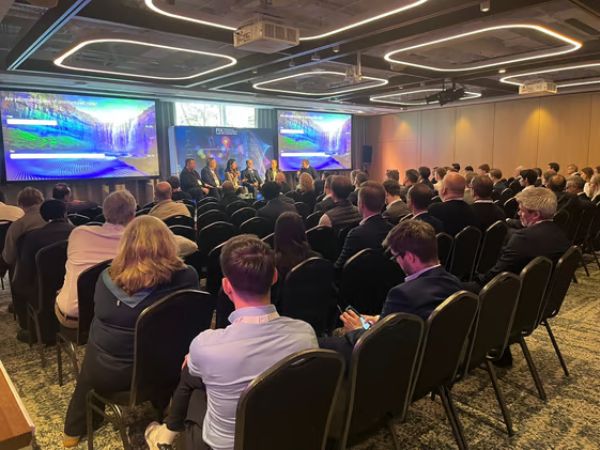
One of the clearest messages from the AI in Trading panel at FIX Trading Community EMEA 2026 was how AI is augmenting traders rather than replacing them. While AI excels at analysing large volumes of data, interpreting context and managing risk still relies heavily on human oversight. The buy-side traders on the panel discussed how AI is now being deployed primarily to enhance workflows rather than automate them entirely:
- aggregating structured and unstructured market data
- identifying signals across news, liquidity flows and analytics
- improving execution analytics and post-trade insights
However agentic AI is beginning to appear as a supporting layer. Modular AI agents are being used to gather and synthesise market information, helping traders make better-informed decisions. But trust remains the biggest constraint. Firms are ring-fencing data, deploying private LLMs, and implementing strict controls to manage model risk, data leakage, and regulatory requirements.
Why this matters for Trading: The near-term future of trading desks is still likely to be augmented traders supported by intelligent systems, not fully autonomous markets. If anything, buy-side trading desks will have more information to sift through, and the new competitive advantage will come from how effectively humans and AI can be integrated within trading workflows.
2. AI Is Reshaping the Next Generation of High-Frequency Trading
In a similar vein, the continued automation of trading workflows is likely to accelerate the expansion of high-frequency trading (HFT) and Electronic Liquidity Provider (ELP) activity. Recent industry research suggests that AI-driven algorithms and scalable cloud infrastructure are becoming central components of next-generation trading platforms, with the global HFT market projected to reach $21.46bn by 2030 – read more here https://www.globenewswire.com/news-release/2026/03/06/3250878/28124/en/High-Frequency-Trading-Business-Report-2026-21-46-Bn-Market-Trends-Opportunities-Competitive-Analysis-and-Long-term-Forecasts-2020-2025-2025-2030F-2035F.html
As a result, leading proprietary trading firms are investing heavily in machine-learning models designed to:
- predict liquidity availability
- optimise order placement and execution timing
- process large volumes of real-time market data
These models are increasingly integrated with ultra-low latency infrastructure and cloud computing, allowing trading strategies to adapt more dynamically to changing market conditions. But the implications extend beyond just speed. Technology-driven liquidity providers are increasingly leveraging data and infrastructure advantages to expand bilateral trading models that compete with traditional order books.
Why this matters for trading: Liquidity formation is becoming more fragmented and technology-driven. As execution increasingly depends on predictive models and proprietary data, access to infrastructure, connectivity and compute power becomes a competitive differentiator. Read more here in the “Markets Unstructured: The Importance of Connectivity in the Reinvention of Markets” series (https://marketstructure.co.uk/our-work/markets-unstructured/), highlighting the growing importance of scalable, multi-asset connectivity and high-quality market data for the future structure of markets.
3. AI Agents Are Beginning to Enter Trading Workflows
In DeFi, AI agents may gain traction more quickly. Aurelion recently launched “Duncan,” an AI trading agent designed to participate directly in digital-asset execution workflows, capable of running automated strategies, managing tokenised gold allocations and interacting across DeFi protocols. Rather than serving purely as analytical tools, AI systems are beginning to act as specialised participants within trading workflows. As a result, digital asset markets are emerging as a testing ground for multi-agent trading frameworks, where AI systems coordinate tasks such as market analysis, liquidity detection, risk monitoring and execution. Read more here – https://www.prnewswire.com/news-releases/aurelion-welcomes-its-first-ai-employee-duncanaure-302706632.html
Why this matters for trading: These developments point to the emergence of agent-based trading ecosystems. While traditional financial markets are likely to adopt this shift cautiously, early experimentation suggests AI agents may eventually interact directly with market infrastructure, raising important questions around accountability, supervision and control – issues discussed in depth at the FIX Trading Community EMEA 2026 AI Workshop. Research into AI agents also highlights how many agents still fail in real-world environments. Traditional evaluations often compress performance into a single success metric, masking operational weaknesses. More comprehensive frameworks now assess agent reliability across dimensions such as consistency, robustness, predictability and safety, suggesting that while capabilities are improving, the reliability required for safety-critical financial workflows remains a work in progress – read more here https://arxiv.org/abs/2602.16666v2 and this report shared by @SamLivingstone on Agents of Chaos – https://agentsofchaos.baulab.info/.
4. AI Continues to Move onto the Desktop
Alongside infrastructure innovation, AI is also starting to appear directly within the trader desktop environment. DeZero is the latest offering to position itself as a “second brain for traders,” aggregating liquidity data, blockchain analytics and market signals into real-time insights. Read more here – https://markets.businessinsider.com/news/stocks/dezero-launches-the-world-s-first-ai-second-brain-for-crypto-traders-1035890780
Unlike traditional charting tools, these systems aim to synthesise multiple data streams and explain market behaviour in context. The goal is not necessarily automation but information compression – translating complex datasets into clear insights that traders can act upon quickly. As the volume of structured and unstructured data continues to grow, these systems may become increasingly valuable in helping traders navigate information overload.
Why this matters for trading: AI-driven decision-support systems could reshape how traders interact with information. The advantage will increasingly lie with firms that can transform vast data flows into actionable insights faster than competitors and deliver tangible differences to the execution of investment ideas.
5. AI-Driven Quant Funds Continue to Demonstrate Performance Advantages
AI-powered quantitative hedge funds are continuing to demonstrate the potential of machine learning trading models – one example Chinese quant fund High-Flyer Quant reported average returns exceeding 50% in 2025 using AI-driven strategies – read more here https://www.mexc.com/news/874070. Strong performance from these strategies is reinforcing institutional investment in:
- data science capabilities
- model development infrastructure
- alternative and unstructured datasets
As systematic strategies become more sophisticated, the boundary between traditional quantitative funds and broader asset management strategies may begin to blur.
Why this matters for trading: AI-driven systematic strategies are likely to move from niche quant funds into the broader institutional toolkit. However, increasing reliance on similar machine-learning approaches could also introduce model crowding and new forms of market correlation.
Across secondary markets, AI adoption is developing across three distinct layers:
- Decision support – AI aggregating and interpreting market data for traders
- Systematic trading – machine-learning models driving signals and execution optimisation
- Agentic systems – autonomous or semi-autonomous AI agents embedded within trading workflows
The frontier now lies at the intersection of agentic AI, governance and market infrastructure.
Markets are not becoming autonomous – but they are becoming increasingly engineered, data-driven and compute-intensive. Firms that successfully combine advanced technology with strong governance, high-quality data and resilient infrastructure are likely to hold the long-term advantage – and as one of the panellists noted as with algo trading, once a few firms demonstrate clear value, industry-wide adoption could follow rapidly – one to keep watching considering the potential implications.
As always thank you for reading – any comments/feedback welcome
Rebecca