
China’s AI transparency, tougher supervision, Palantir for Trading, T+1 regtech, and the MCP Buzz about Agents – This week’s AI In Trading September 5th 2025
I hope everyone is rested after the summer break. This week’s roundup tracks how AI is reshaping front-to-back trading workflows: China’s new AI transparency rules, the shift to real-time pre-trade “situational awareness”, the latest on tougher supervisory controls (ASIC, CFTC, FCA), regtech acceleration under T+1, and the move from hand-wired tools to MCP-orchestrated, multi-agent systems. Here’s something for the weekend on the 5 things that matter most for AI in Trading.
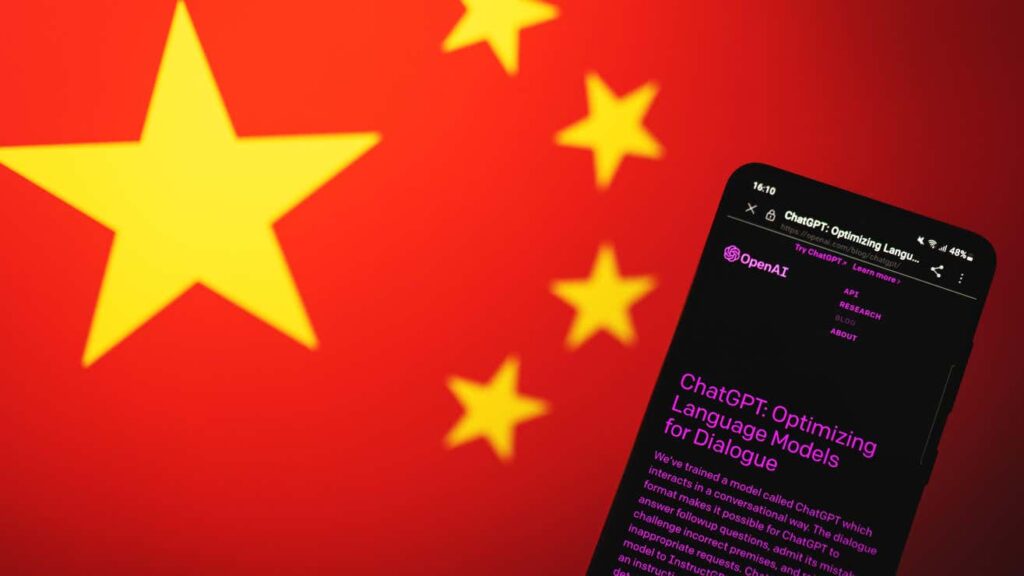
1. Its no longer just the EU – China is raising the transparency bar on AI content.
China’s Measures for Identifying AI-Generated Synthetic Content took effect 1st September 2025 (https://www.cac.gov.cn/2025-03/14/c_1743654684782215.htm). They mandate prominent, modality-specific labels (text/audio/image/video/virtual scenes) and embedded identifiers in files. App stores must verify labelling before listing; providers must spell out labelling methods in user terms. The general consensus is the rules are more prescriptive than the EU AI Act’s transparency clauses. (chinalawtranslate.com, Bird & Bird, sidley.com, Reuters)
Why this matters for AI in Trading:
· Research & comms labelling: AI-assisted notes distributed in/through China will need on-screen labels and file-level tags requiring updates to templates, disclosure footers, export pipelines, and portals. (chinalawtranslate.com)
· “AI-origin” metadata in China-sourced news/sentiment feeds will need to adjust pre-trade models (e.g., weight or exclude synthetic headlines). (chinalawtranslate.com)
· Cross-border ops: Harmonisation of EU/UK policies with China’s more granular approach may move the dial still further on machine-readable provenance across the globe (Bird & Bird)
2. More on Pre-trade Analysis: from static screens to real-time “situational awareness”
The move to 24/7 Trading and integration with retail and Institutional is raising the demand for more tools to optimise routing strategies ahead of order placement compressing time-to-insight before the first clip: BTON’s explainable-AI routing intelligence being baked into FlexTrade’s EMS and expanding in the US. (The TRADE, FlexTrade); Robinhood UK “Cortex Digests” summarise why a stock is moving (news, analysts, technicals, proprietary signals). (Robinhood Newsroom, The Fintech Times, Robinhood) and now – TradeInsightAI (TAI) described as “Palantir for Trading” synthesizes ultra-high-resolution market data, news, social, Fed and SEC feeds into objective, actionable narratives for traders, PMs and RIAs. The more regulators demand machine-readable datasets and use in enforcement – the more fuel for pre-trade models: recent surveys and reviews show ML/LLMs plus alt-data improve forecasting/signal discovery and are shifting more processes from batch to real-time pre-trade analytics. (ScienceDirect, Lowenstein Sandler)
Why this matters for AI in Trading.
· Structured SEC/XBRL data plus live market/alt data is likely to increase the appetite to use more modelling pre-trade across a broader range of instruments. Richer provenance and standardized data make it easier to evidence decisions to compliance. (SEC)
· Integrated pre-trade narratives could reduce search costs and latency before routing – improving execution decisions. (FlexTrade)
3. More from the Supervisors in the need to sharpen controls: ASIC kill-switches and CFTC AI-aware surveillance
Last month we focused on the FCA’s multi-firm review flags weaknesses in algo governance, testing, and oversight, especially third-party models. (FCA). This week, Australia’s ASIC CP 386 proposes extending mandatory kill-switches and strengthening testing/monitoring specifically for AI/ML-powered algos; comments are requested by 22nd October 2025; with rules targeted for 31st March 2026. (asic.gov.au, download.asic.gov.au, Global Trading, FinanceFeeds). In addition, the US CFTC is replacing legacy surveillance with Nasdaq Market Surveillance – automated alerts, cross-market analytics, and auditability (CFTC, Nasdaq)
Why this matters for AI in Trading: The risks of “AI collusion” are still on the agenda after a July NBER paper showed RL agents tacitly collude in simulations; fresh explainers last week kept it on the policy radar. (NBER, Investopedia)
· Firms must evidence how AI drove routing and risk choices. (FCA)
· Firms need to design for fail-safe application: kill-switches and model rollback as non-negotiable controls for AI/ML algos. (download.asic.gov.au)
· Surveillance parity for 24/7: As regulators modernize, expect scrutiny to match crypto/24/7 cadence – firms will need to build audit trails against tacit collusion concerns. (CFTC, NBER)
4) Regtech & the Back-Office Bot to meet the demand for faster & more reliable ops for T+1 (and beyond)
Nasdaq Verafin and BioCatch have teamed up to curb fraud by embedding behavioral analytics into Verafin’s stack (Reuters) LayerX raised $100–101m Series B to automate back-office workloads with AI (TechCrunch, Yahoo Finance, PYMNTS.com) – yet a report from earlier in the year noted the majority (70%) of banking IT budgets are still spent on sustaining outdated systems prone to ongoing technical challenges and a lack of efficient workflows (https://www.tradefinanceglobal.com/posts/future-payments-age-ai/). Across departments, this includes the difficulty to retrieve siloed data when required for tasks and reports – but the clock is ticking: Europe, Switzerland and the UK have all locked in T+1 for 11 Oct 2027, with ESMA and HMT roadmaps now live. (Consilium, ESMA, GOV.UK)
Why this matters for AI in Trading.
· Settlement compression: T+1/T+0 ambitions force same-day allocations, confirms, corporate actions, and breaks – AI agents will need to replace manual back-office outsourcing in many workflows to speed up the process as well as reduce human risk. (ESMA)
· Fraud-ops convergence: Surveillance, AML, and client-risk signals are merging, moving behavioural AI belongs alongside market abuse analytics in control rooms. (Reuters)
5) Agential workflows continue to evolve to MCP Orchestration
More this week on how agential workflows will shift model production. Function Calling remains how models express intent to use a tool (OpenAI Platform, Microsoft Learn) but MCP (Model Context Protocol) will standardizes how tools are discovered, described, and governed across apps/agents—think “USB-C for AI.” Microsoft has now added Windows support and an evolving spec. (Model Context Protocol, The Verge) and BigData.com launched two Remote MCPs that make it easier for financial researchers, banks, and hedge funds to connect premium data directly to their agentic AI platforms. No coding or complex integrations. Just plug and play. (https://lnkd.in/dJAV_YZA).
Why this matters for AI in Trading.
AI is turning trading into a 24/7, data-driven co-pilot that learns from context, scans thousands of signals across markets, and explains its moves – leaving rule-bound desks struggling with speed and overload. Agentic AI is moving deeper into trading workflows because the stack is maturing from hand-wired function calls (how models express “intent”) to orchestration via the Model Context Protocol (MCP), which standardizes how tools are discovered, invoked, audited, and governed across desks and venues; that shift turns pilot bots into modular, multi-agent systems that can coordinate order flow, options flow, sentiment, and risk in real time, while no-code builders and memory-based continual learning desks adapt without touching model weights.
· The Pluses – equal tighter controls via approvals/segregation of duties, consistent audit trails, faster anomaly detection, vendor portability that reduces brittle EMS/OMS wiring, and intraday risk recalibration.
· The minuses – greater risk of new failure modes (tool drift, bad-memory replay), governance complexity (who approves updates to agents and memories), concentration risk in shared MCP infrastructure, harder model validation across interacting agents, and the need for stricter guardrails (limits, kill-switches, sandboxed rollouts, and replay testing) to keep adaptive systems compliant and safe at scale.
We are currently looking at this in the FIX AI Working Group as to what tags would be needed to better manage agential workflows including whether the order was generated, suggested or influenced by AI and what the underlying agent’s specific objective was – such as liquidity seeking, risk reduction etc. The next meeting is coming up mid-September so please get in touch if you would like to participate.
As always, thank you for reading, and let me know what you found most useful, what you disagreed with, and what you would like to see more of next time.
Best wishes
Rebecca